
26th August 2026
With property prices staying high across Bristol and Bath, converting an existing loft space is still often the most cost-effective way to add a new bedroom, home office or bathroom.
And the good news is that many loft conversions don’t require planning permission. Instead, they can often be completed under permitted development rights.
What are permitted development rights?
Permitted development rights allow certain home improvements to be carried out without the need to seek planning permission.
Many loft conversions are permitted developments. However, whether a project qualifies depends on factors including the type of property, location and scope of work proposed.
Houses vs Flats
A common misconception is that permitted development rights apply equally to all homes.
In reality, flats and maisonettes are treated differently from houses.
While many houses benefit from permitted development rights, flats or buildings that contain flats generally do not. This often catches people by surprise, particularly in urban areas where converted buildings and leasehold properties are common.
Other homes that do not generally benefit from permitted development rights include homes that were converted to residential use and those that have added an additional storey.
Designated land
Permitted developed rights do not apply to homes on Article 2(3) designated land which includes conservation areas and areas of outstanding natural beauty. For more information see:
Permitted Development Right For Householders – Technical Guidance
List of Bristol conservation areas
List of Bath conservation areas
Scope of Work
In general, a loft conversion must not enlarge the existing roof space of a terraced house by more than 40 m3 and by 50 m3 for a semi or detached house to qualify as a permitted development.
Other exclusions also apply and to qualify as a permitted development a loft conversion must not:
- Raise the current height of the roof
- Extend beyond the current roof slope on the face of the house facing a road
- Feature a balcony, veranda or similar
- Use materials dissimilar in appearance to existing materials
(Note Building Regs are separate to planning permission. Every conversion must meet Building Regs requirements for structural safety, fire protection, insulation, and safe escape routes)
Do Different Types of Loft Conversion Affect Planning Requirements?
Yes, some conversion styles are more likely to fall within permitted development rights.
Velux Conversions
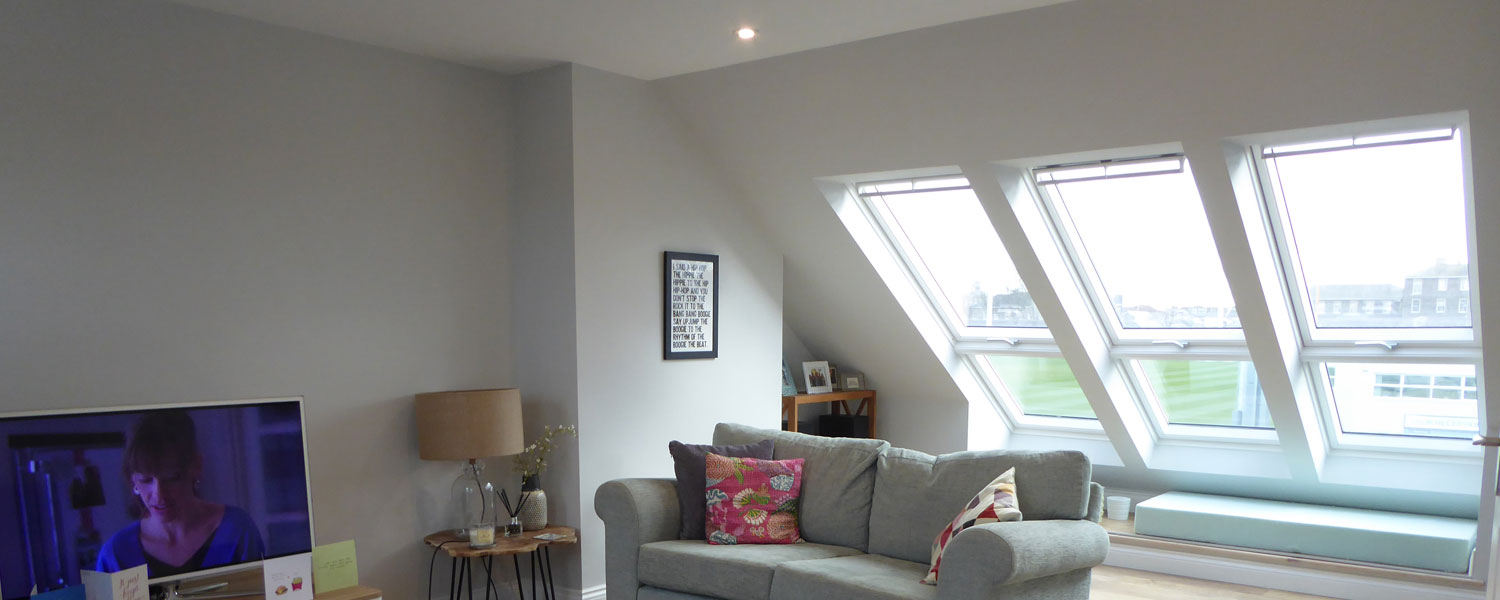
Velux or rooflight-style loft conversions typically involve the fewest external changes. Because the existing roof structure remains largely intact, these projects are often among the most straightforward from a planning perspective.
Dormer Loft Conversions
Rear dormers are a popular choice in Bristol and Bath because they create significant additional floor space and headroom. Many rear dormer conversions can fall within permitted development rights, subject to the relevant limitations and conditions. However, size, positioning and design remain important factors.
Hip-to-Gable Conversions
Hip-to-gable conversions are commonly seen on semi-detached and end-of-terrace properties. They can dramatically increase usable loft space but involve substantial changes to the roof structure. Depending on the proposal, planning considerations may be more complex.
Mansard Conversions
Mansard conversions typically involve major roof alterations. As a result, they are more frequently associated with planning applications than other loft conversion types.
Special considerations for Bristol & Bath homeowners
Bristol and Bath have a varied housing stock that often lends itself well to loft conversions.
Many semi-detached and detached properties across both cities can accommodate dormer or rooflight conversions without requiring extensive structural alterations.
That said, both cities contain many listed buildings and conservation areas where additional planning restrictions apply and homeowners should check whether their property is affected by local planning designations before proceeding.
Lawful Development Certificate
We now often recommend that homeowners seek a Lawful Development Certificate. This is not mandatory but the certificate provides official confirmation from the local authority that the proposed works are lawful.
Although obtaining a certificate involves additional administration, it can offer valuable peace of mind. It may also prove useful when selling the property in the future, as buyers and solicitors often request evidence that alterations were carried out correctly.
Frequently Asked Questions
Do all loft conversions need planning permission?
No. Many loft conversions are carried out under permitted development rights, provided they meet the applicable limits and conditions.
Do loft conversions need Building Regulations approval?
Yes. Regardless of planning requirements, Building Regulations approval is normally required to ensure the conversion meets current safety and performance standards.
Do flats have permitted development rights for loft conversions?
No. Permitted development rights for loft conversions generally apply to houses. Flats and maisonettes are treated differently and commonly require planning permission.
Can I add a dormer without planning permission?
In many cases yes, provided the dormer complies with permitted development criteria. The precise design and dimensions will determine whether it qualifies.
Are loft conversions worthwhile in Bristol and Bath?&
For many homeowners, a loft conversion can provide valuable additional living space while avoiding the disruption and costs associated with moving. Suitability depends on the property and local planning constraints.
Summing up
So, do you need planning permission for a loft conversion? in many cases the answer is no, provided the proposal falls within permitted development rights. However, the larger and more complex the changes to the roof, the more likely planning permission may be required.
For homeowners in Bristol and Bath, local factors such as conservation areas, historic buildings and the unique character of neighbourhoods can influence what is possible. Taking advice early can help avoid delays and ensure your project progresses smoothly.
If you are considering a loft conversion in Bristol, Bath or the surrounding area, please contact us to discuss your ideas and arrange a free initial consultation.
Visit the contact page on our website to send us an enquiry. We’ll get back to you within 24 hours.
26th August 2026